Retail & restaurant
Storefront and pad-building exteriors where customer access has to stay clean and the schedule cannot run into peak hours. Night crews work from 6pm close to 2am reopen.
Exterior cladding, facade restoration, and full-envelope work on retail, hospitality, multifamily, and light industrial buildings across the Charlotte metro. Off-hours crews. Phased scheduling. Single point of contact for the property manager.
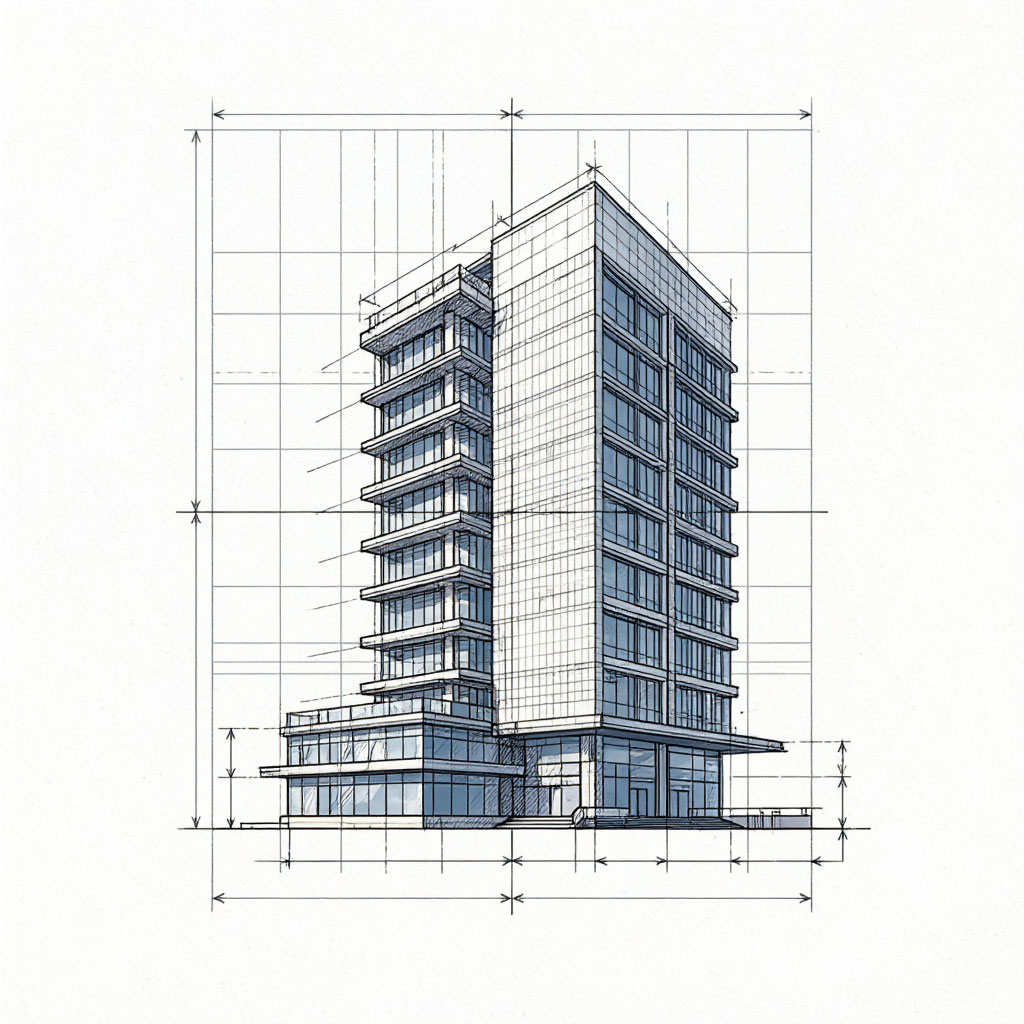
Each sector has a different constraint — retail has customer flow, multifamily has tenants in place, hospitality has guests. The common thread is that the building cannot shut down for the work.
Storefront and pad-building exteriors where customer access has to stay clean and the schedule cannot run into peak hours. Night crews work from 6pm close to 2am reopen.
Apartment communities, townhome clusters, and mixed-use residential buildings. Phased unit-by-unit so no more than two units are open at once and every unit is sealed before dark.
Hotels, motels, and short-term rental buildings. Guest-facing scheduling coordinated with the front desk, common-area work done in low-occupancy windows, facade sections completed in logical phases.
Warehouse, distribution, and light manufacturing buildings. Long runs of metal panel and standing seam, dock-door flashings, and loading-bay envelope work done without blocking truck access.
Low- and mid-rise office buildings plus medical office and outpatient facilities. Work scheduled around tenant business hours, with noise-restricted windows on clinical days.
Municipal buildings, schools, and churches. Public-sector bidding experience, prevailing-wage documentation, and coordination with facility managers on access and safety requirements.
Most commercial exterior work is scheduled for the window between close and open — 6pm to 2am, in most retail and hospitality cases. The site is cleaned, sealed, and secure before the first employee arrives in the morning.
Request an off-hours bidCommercial projects run through a structured bid and phasing process. No step is skipped for speed.
Full-envelope inspection with elevation-by-elevation photographs, moisture readings, and condition report.
1–3 daysLine-item proposal in AIA-compatible format, with alternates for different material grades and phasing options.
5 daysWritten schedule coordinated with the property manager, tenant notices prepared, access and parking plan signed off.
5–10 daysWork runs in the agreed phases. Daily photo updates, weekly written progress reports, change orders only in writing.
Per scheduleFinal walkthrough, punch list closed, O&M documentation and warranty issued for the whole building.
2 days$2M general liability, $1M auto, workers' comp, and umbrella. COI issued to the property owner and manager as additional insured within one business day of request.
Written safety plan covering fall protection, public protection, equipment use, and emergency procedures — specific to your property and phasing plan.
Every crew supervisor holds OSHA 30 certification. Field workers hold OSHA 10. Weekly toolbox talks documented and filed.
Netting, signage, and rerouting at any elevation above occupied public space. Walkways remain covered and lit for pedestrian use throughout the project.
Certified payroll and prevailing-wage compliance for public-sector projects. Documentation submitted with each progress billing.
All personnel on site have passed a background check. Required on multifamily, hospitality, and medical properties.
Commercial projects are bid as a whole rather than quoted per square foot. The numbers below show the components that make up a typical bid.
All commercial bids include a written scope of work, a phasing schedule, and a list of exclusions. Change orders are issued in writing before the additional work begins — never billed retroactively. Progress billings follow the AIA G702/G703 format when the owner or lender requires it.
Commercial projects typically start around $45,000 in scope. That covers a single pad-building reclad, a small multifamily elevation, or a targeted restoration on a commercial property. For smaller work — a few panels, one elevation — we handle it under our residential siding repair service.
Yes, and it is the standard condition on almost every commercial job we run. We phase the work so that no more than two units are open at a time on multifamily, and every unit is closed and weather-tight before end of shift. On retail and hospitality, we work the off-hours window and clean up before open.
Yes. $2M general liability, $1M auto, workers' comp, and umbrella. Single-project bonding capacity of $500,000; larger projects can be bonded with additional lead time. COI issued to the owner, manager, or lender as additional insured within one business day of request.
Yes. We have completed municipal and school district work and are familiar with public bidding requirements, prevailing wage documentation, and certified payroll reporting. Registered as a vendor with several local jurisdictions in Mecklenburg, Union, and Cabarrus counties.
Yes. On larger projects we coordinate with roofing, window, mechanical, and electrical contractors as the general contractor or as one trade among several. We attend weekly coordination meetings and provide our own schedule updates in the format the general contractor requires.
Off-hours labor runs 18% to 32% above standard day-rate, depending on the shift window, the crew size, and whether the work is on a weekend or a holiday. That premium is listed as a separate line in the bid — not buried in the labor rate.
A single pad-building reclad typically runs three to five weeks. A 20-unit apartment building runs eight to fourteen weeks when phased around tenants. Larger envelope restorations on mid-rise buildings run twelve to twenty-four weeks depending on scope and access.
We start with a site survey, an elevation-by-elevation condition report, and a written bid in the format your ownership or lender requires. No charge for the survey on projects above the minimum scope.