Material drop & staging
Materials arrive the afternoon before work begins. We stage the panels, trim, and fasteners, protect landscaping with tarps, and photograph the property's existing condition.
Tear-off, substrate inspection, house wrap, and finished cladding — done by one crew from the first pry bar to the last bead of caulk. No mid-project handoff, no rotating subcontractors, no allowances that quietly grow.
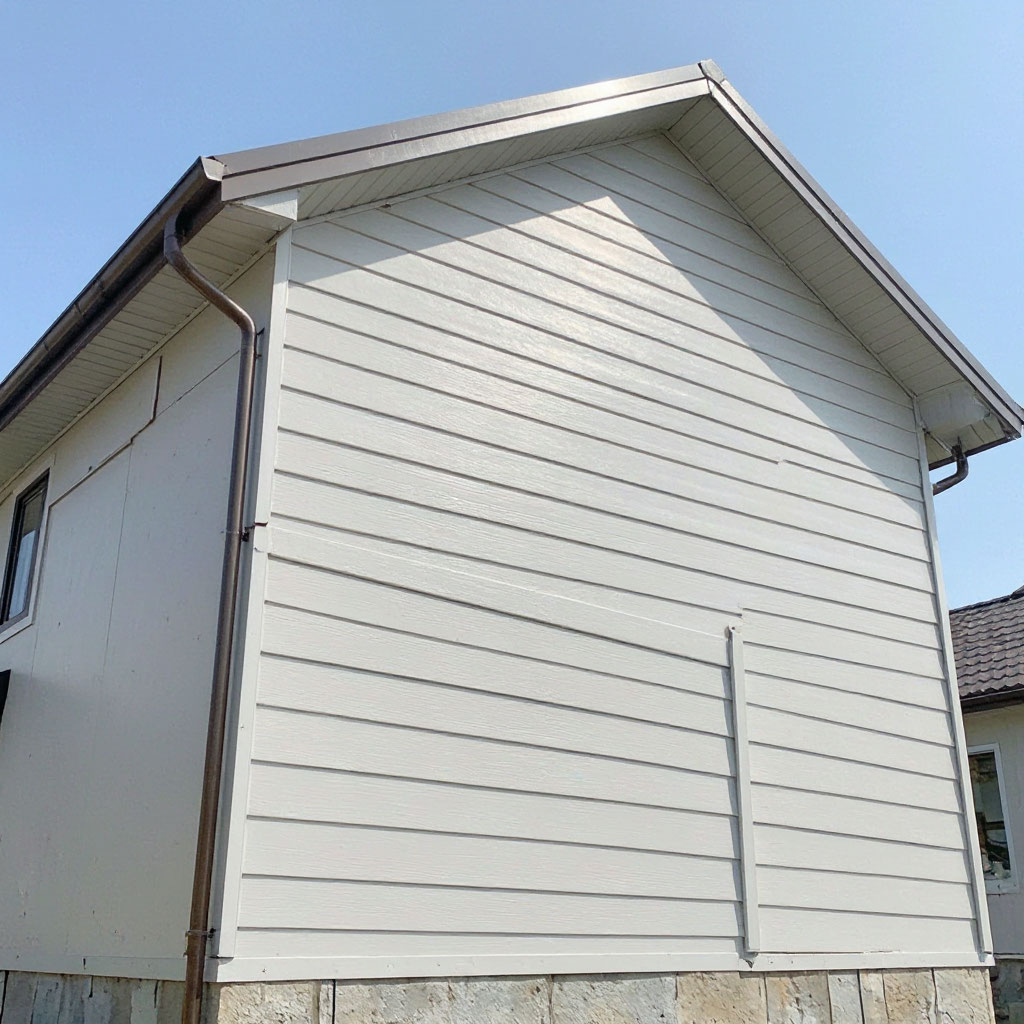
The scope below is included in every full-installation proposal. Nothing is left as an allowance, and nothing is quietly subcontracted to a different crew.
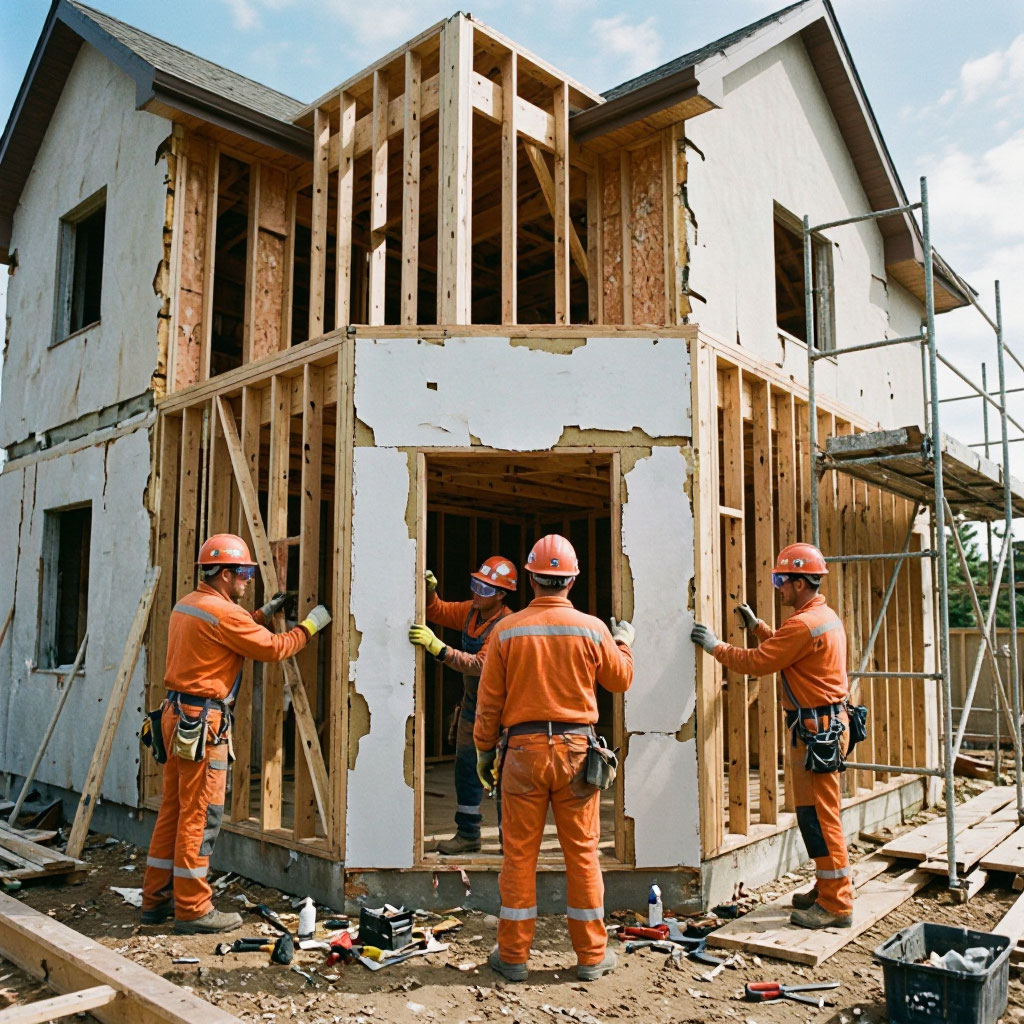
Removal of the existing cladding, nails, and fasteners. Debris hauled to a licensed transfer station. Site swept daily and cleared before we leave.
Every wall section gets probed for rot and soft spots. Failed panels are replaced in kind — OSB for OSB, plywood for plywood. Repairs are photographed and documented.
New permeable WRB — either a mechanically attached house wrap or a fluid-applied membrane, depending on the wall assembly. All seams taped per manufacturer spec.
New head flashing at every window and door, new sill pan where the existing is compromised, and proper kick-out flashing at roof-to-wall intersections.
Installation of the selected siding system, including corner boards, J-channel, starter strips, and PVC or composite trim at all openings and corners.
High-grade urethane caulk at every seam, penetration, and transition. Paint touch-up where field cuts are visible. Final pressure-wash of walkways and driveways.
Manufacturer warranty registered directly in the property owner's name. Our own 12-year workmanship warranty issued in writing at final walkthrough.
A typical installation for a 2,400 sq ft single-family home. Larger homes run longer; smaller homes finish faster.
Materials arrive the afternoon before work begins. We stage the panels, trim, and fasteners, protect landscaping with tarps, and photograph the property's existing condition.
Old cladding removed in sections, nails pulled, sheathing probed and repaired. WRB installed and taped as we go, so the wall is never left exposed overnight.
Corner boards set, starter strips level, panels run to manufacturer specification. Window and door openings trimmed last so the flashing can be inspected before it is covered.
Fascia, soffit, and opening trim installed. Urethane caulk at every seam and penetration. Paint touch-up on field cuts. The building is water-tight from this point.
Magnetic sweep for nails, pressure-wash of hardscape, and removal of all debris. You walk the property with the project manager and note anything you want corrected.
Punch list corrected on the spot. Manufacturer warranty registration and our 12-year workmanship warranty issued in writing before we close the file.
We install all four families below. We will recommend the one that fits your building and budget — not the one with the highest margin.
The most cost-effective full replacement option. Modern insulated profiles have improved rigidity and color retention over the vinyl used in the 1990s. Best where budget is the primary constraint.
James Hardie and equivalents. Dimensionally stable, fire-resistant, and holds paint far longer than wood. The standard choice for homeowners planning to stay long-term.
LP SmartSide and similar. A middle ground between vinyl and fiber cement — more depth than vinyl, less cost than fiber cement, with factory finishes that hold up well in the Carolina climate.
Mostly used on commercial and modern residential facades. Long service life, low maintenance, and a profile that reads as deliberate rather than decorative. Available in matte and glossy finishes.
The numbers below reflect actual completed jobs in the Charlotte metro in 2026. Your written proposal will be itemized the same way, with quantities specific to your property.
Ranges reflect standard labor rates for the Charlotte metro in 2026 and exclude permit fees where applicable. Every project is quoted individually after on-site assessment — no estimates over the phone, no allowances that grow.
We tear off. Every time. Installing new cladding over old is faster and cheaper, but it hides whatever is happening to the sheathing and flashing underneath — which is exactly what the new cladding is supposed to protect. If a contractor offers to go over the old siding, ask what happens when the hidden flashing fails.
Vinyl installed runs $9.40 – $12.20 per square foot of wall area. Fiber cement runs $11.20 – $17.40. Engineered wood falls in between. Those numbers include tear-off, house wrap, trim, and disposal. Sheathing repair, if needed, is quoted separately after the wall is open.
A single-family home between 1,800 and 3,000 square feet takes seven to twelve working days on site. That assumes materials are already delivered and no major sheathing repair is required. Homes with complex rooflines or significant stucco work run longer.
No. The house remains fully weather-tight overnight and in rain — we install the WRB as we tear off, so walls are never left exposed. You may want to keep vehicles out of the driveway during the day and keep pets inside while crews are working on the ground.
We photograph the damage, measure the affected area, and send you a written change order before doing any repair. You approve or decline the repair in writing. If you decline, we close the wall back up with new cladding over the damaged area at your direction — but we document the condition in the file so there is no ambiguity later.
Yes. Twelve years on installation labor — fastening, flashing, sealing, and trim detailing. Manufacturer coverage on the cladding itself runs separately and is registered in your name at project close. Both are issued in writing at the final walkthrough.
Installation crews are typically booked about two weeks out from the date a proposal is signed. During peak storm season — usually April through June — that can stretch to four weeks. Estimates, by contrast, are usually scheduled within five business days.
A project manager walks the property, measures the wall area, checks the substrate behind any visible problem areas, and sends a written itemized proposal within two business days.